
How to check your oil
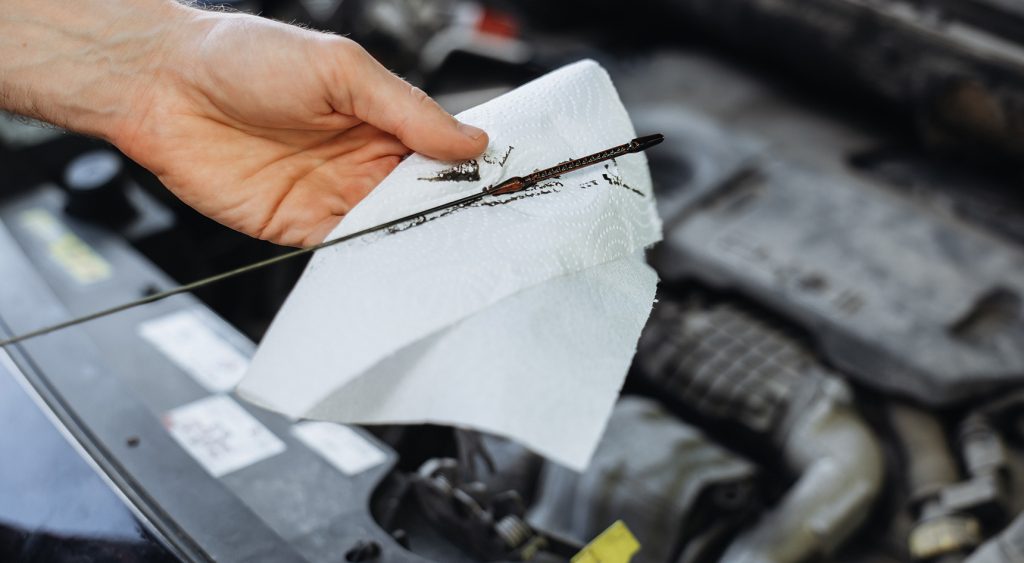
A sure-fire way to extend the life of your engine is to check the oil. The right quantity and quality of oil lubricates components, clears out debris, and prevents corrosion – all vital for engine health and performance.
Your owner’s manual will outline recommended oil change intervals, but it pays to check at home between services.
1. Hot or cold?
For accuracy, check the oil on level ground with the engine at operating temperature, rather than stone cold. To get there, let the engine idle for about five minutes, then turn off the ignition and lift and secure the bonnet. Do it the same way each time so you can compare readings and monitor any changes. Be mindful of hot surfaces before you start touching anything.
2. Find the dipstick
If your engine doesn’t have a dipstick, consult your owner’s manual to see how to check levels. But if it does, it’ll be on top or at the side of the engine block, usually with a red, orange, or yellow ring or handle. Consult your owner’s manual if you’re having trouble finding the dipstick. Have a clean, lint-free rag in your other hand, then pull firmly on the dipstick to remove it. Wipe the dipstick on the rag, reinsert it fully into its tube, then remove it again.
3. Check the level
The dipstick should have two lines or marks near the bottom end to indicate the oil level. They indicate MAX for maximum and MIN for minimum, H for high and L for low, or something similar. The oil level should sit between the two, or on the maximum line if the car’s just been serviced. Near or below the minimum means it needs a top-up. If the oil is dark brown or black, watery or sludgy, have an RAA Approved Repairer take a look. Worth noting: some diesel engines have an extra indicator above the full mark, and oil levels can sometimes rise on their own between services. Check your owner’s manual if anything looks unusual.
4. Oils ain’t oils
Okay, we’ve borrowed a line from an old Castrol commercial, but the point stands. Motor oils differ by type (mineral, semi-synthetic and synthetic) and by viscosity (resistance to flow). Check your owner’s manual or consult an expert before adding oil to your engine. If you need a top-up, place a funnel into the oil filler hole and add the oil gradually. Check the dipstick regularly as you refill to avoid overfilling.