
Nailed it? What to do about a punctured car tyre
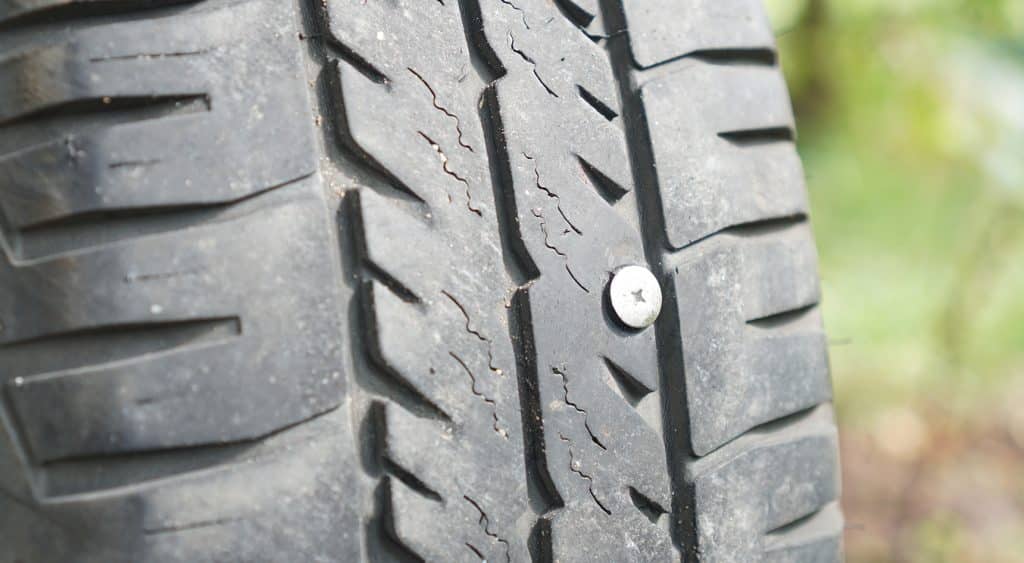
With some car noises, you just know something’s wrong. And when you’re driving slowly and hear a rhythmic click, click, click or thump, thump, thump, it often means you have a nail or screw in your tyre. Here’s what to do.
What’s the damage (and where)?
If you think there’s a problem with your tyre, don’t panic or brake suddenly. Pull over safely as soon as you can and inspect your tyres thoroughly. If you notice damage to the tyre’s sidewall or the outer edges of the tread (shoulder), chances are it’s irreparable so don’t continue driving on it.
If the tyre is totally flat, don’t drive on it either, even at low speeds or for a short distance. You can damage the wheel rim and could lose control of the vehicle.
In either case, you’ll need to call for assistance or fix the tyre yourself (see below).
If your tyre isn’t flat, check for any foreign objects in the tread, such as nails, screws or sharp stones. You may need to move your car forward or backward slightly to position the tyre correctly.
So, there’s a nail or screw in the tread. What now?
Your first instinct might be to remove the nail or screw, but don’t do that yet. Leave it in the tyre for now. It might be acting as a plug and slowing air loss. If you remove the object, the tyre will deflate rapidly, making the situation worse.
If you have a tyre pressure gauge, check whether the tyre is losing air. If the air pressure is similar to the level you normally inflate it to, the tyre might have a slow leak and be driveable for a short time. If the pressure is significantly lower or dropping quickly, don’t drive on it.

Option 1: Take it to a tyre retailer
During business hours, you may be close enough to drive to a nearby tyre retailer. If the damage is limited to the tread, it may be repairable, but then again you may need a new tyre. A technician first needs to remove the object and make an assessment.
Option 2: Fix it yourself
If you’re confident fixing the tyre yourself, you have a few options. For a temporary fix, use a puncture repair kit if your car has one, or a can of tyre sealant. The only way to permanently repair a puncture is to take the tyre off the rim and inspect it for internal damage, so have it checked by an expert as soon as possible. Replace the punctured tyre with your spare; not all cars have a spare, so it’s worth checking before you need one. If it’s a space saver spare, remember they’re typically speed limited to 80 km/h so don’t travel too fast or too far and have the tyre repaired as soon as possible.
Option 3: Call RAA
If you’re not confident fixing it yourself, or it’s damaged beyond repair, RAA is on hand, 24 hours a day, seven days a week. Call RAA roadside assistance on 13 11 11 or visit the RAA app to report the incident and a patrol will assess the situation, fit your spare wheel, or arrange a tow.
Look after your tyres
When it comes to car maintenance, an ounce of prevention really is worth a pound of cure. You’re not going far if your tyres aren’t up to scratch and although you can’t help bad luck, you can keep an eye on your tyres before they become a problem.
Check your tyre pressure regularly and if your car has a tyre pressure monitoring system, refer to your owner’s manual and learn how to use it. It may help you notice any drops in air pressure before you get stuck. And, when you’re inflating your tyres, remember to add some air to the spare tyre too if you have one. There’s no point having a flat spare tyre when you need it the most.