
Considering an EV? Here’s where to start
With fuel prices soaring and anxiety about fuel availability, you may be thinking to yourself, ‘Is now the time to switch to an electric vehicle (EV)?’
You’re not alone. In fact, as petrol prices have spiked, so has Australian searches for ‘electric vehicle’. The search term has more than tripled since the end of February 2026, according to Google Trends data.
Even before the Iran war affected fuel prices, almost one in two SA drivers were considering buying an EV as their next vehicle, according to a recent RAA survey.
Lower running costs and saving on fuel were the main motivations for switching, followed by less servicing requirements and environmental sustainability.
RAA Principal Advisor Energy and Future Mobility Peter Nattrass says EV interest will continue to climb as fuel prices remain high.
“More motorists are seriously considering EVs for their next purchase, particularly as they learn more about the savings on fuel and maintenance,” Peter says.
The tripling Google searches for ‘electric vehicles’ in recent months isn’t just curiosity. In March, 1084 of the 6418 new cars sold in SA were BEVs or PHEVs – a 37 per cent jump on the previous month.
“South Australians are looking very closely at the cost of running their vehicles right now,” Peter says.
“Electric vehicles are increasingly being seen as a practical way to reduce the cost of driving.”
Here’s what you need to know if you’re thinking of making the switch.
What do the acronyms mean?
There are a lot of abbreviations and strange terminology used in the EV world, and knowing what’s what will help you make the most informed choice.
- HEV stands for hybrid electric vehicle and refers to cars which typically combine a petrol engine with a very small battery and electric drive motor. Running largely on petrol, the electric-only range is typically less than one kilometre.
- PHEV stands for plug-in hybrid electric vehicle. A PHEV has a bigger battery than a HEV, that can be charged with mains electricity enabling an electric-only travel distance of 50–100km.
- BEV stands for battery electric vehicle. This is a car that has a very large, specialised battery and it’s 100 per cent driven by an electric motor(s). These vehicles can typically drive 300-600km before needing to recharge.
Which one do I want?
BEV, PHEV or HEV – each have their pros and cons, and which one you want will depend on several factors including initial price, your daily driving range, access to a home power point and how much you could save on fuel costs by choosing a PHEV or BEV.
According to the Electric Vehicle Council, there are more than 40 brands offering 150-plus EV models that Australians can choose from. From buzzy compact vehicles to utes and large SUVs, the market caters for a wide variety of budgets, lifestyles and needs.
Have a look at our car reviews to get a feel for some of the cars on the market.
BEV vehicles include:
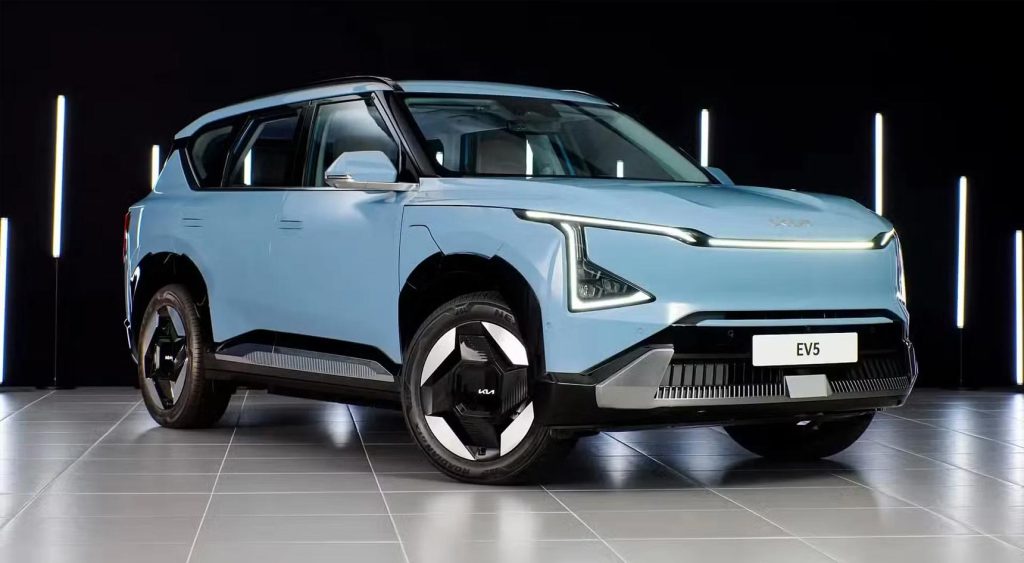

PHEV vehicles include:
HEV vehicles include:
How do costs compare?
Rising petrol and diesel prices are driving many Australians to research EVs. Here’s a brief overview of what to expect if you buy an EV.
Buying new
Hybrids tend to be the least expensive option, followed by PHEVs, with BEVs typically costing the most – though not always.
“Up-front costs vary significantly depending on battery size, range, and technology, with longer-range models and premium features pushing prices higher,” Peter says.
Entry-level models begin at about $25,000 (including on-road costs) which is comparable to the most affordable internal combustion engine (ICE) vehicles. New mid-sized SUVs and models offering longer battery range can cost anywhere from $60,000 to $65,000.
Buying second-hand
As more EVs join the used-car fleet, considering a second-hand vehicle may be a more cost-effective option. But just as with petrol or diesel cars, there are a few things to consider including age, battery size and condition.
Early models can now be found from $20,000 to $30,000, with most sitting in the $35,000 to $50,000 range.
“Second-hand EV’s built post-2020 are likely to have better battery technology and longer driving range, than earlier models,” Peter says.
“Look for second-hand EVs with a Battery State of Health Certificate.
“Make sure you pay close attention to battery health, remaining warranty coverage and real-world driving range, and ensure the vehicle uses the industry standard CCS2 Combo charging plug, so you can use public chargers.”
Running and charging costs
Ongoing running costs are one of the biggest advantages of EV ownership.
Home charging your BEV or PHEV on a standard tariff typically costs $4 to $8 per 100km (compared to roughly $12 to $18 for petrol at current fuel prices), depending on your electricity rates, driving habits and EV efficiency. With solar at home, daytime charging can approach zero additional cost.
Using public fast charging can cancel out potential petrol or diesel cost savings as charge point operators can charge $0.65 to $0.80 per kilowatt hour (kWh) (roughly $13 to $18 per 100km). Booking to stay in accommodation with an RAA Charge Destination AC Charger can save you up to 50 per cent, as our electricity rates are $0.33 to $0.45 per kWh (roughly $7 to $9 per 100km).
RAA’s Charge network has installed more than 550 charging plugs across South Australia with transparent fees for peak and off-peak charging times.
PHEVs can cut petrol consumption by 50 per cent or more for drivers who regularly charge and use short electric-only trips. HEVs can reduce petrol use by up to 40 per cent in congested, stop-start urban driving but they do not materially reduce fuel use on long drives or regional road trips.
Maintenance costs
According to the Electric Vehicle Council, EV owners are estimated to save between $300 and $400 every year in maintenance costs.
“While a petrol engine has more than 2000 moving parts, an EV motor usually has fewer than 20,” Peter says.
This means no annual oil changes, spark plugs or fuel filters to replace – even brake pads last longer thanks to regenerative braking instead of traditional friction braking.
And while battery replacement outside of warranty can be costly, the typical EV battery lifespan is between 15 and 20 years.
What do I need to know about charging?
The time it takes to charge an EV varies, both at home and at public chargers.
On the road, it could take from 15 to 45 minutes to charge from 10 per cent to 80 per cent at a public DC fast charger. The average charging time on the RAA Charge network is 33 minutes.
Charging speeds slow considerably from 80 per cent to 100 per cent. On a long drive, you may find it’s quicker to stop every two hours for a rest and charge break, rather than charge beyond 80 per cent and cause a queue of frustrated EV owners to build-up behind you.
If your car is parked at home and you’re using a standard powerpoint socket, this can take more than 24 hours to fully charge. Dedicated wall mounted EV chargers are much quicker and can take between three and 10 hours.
Watch as RAA’s Program Director for Electric Vehicle Charging Andrew Howard explains charging EV batteries further.
How far can I drive before the battery runs out?
Range anxiety has always been a part of driving, as anyone who’s watched the fuel light flick on knows.
But with advancements in battery tech and the rollout of charging infrastructure, there’s a lot less to worry about when driving an EV. Manufacturers put their vehicles through their paces in city and regional conditions to estimate efficiency and best-case scenario range.
Today’s BEVs can travel between 300 and 600km per charge – with some even exceeding 700km. This means a single charge can take you the 450km from Adelaide to Mount Gambier, or provide up to a week or two of suburban driving. Not only that, but the distance between regional RAA Charge locations is typically less than 50-100km – comfortably in the average range.