

3 Australian innovators inspired by Country
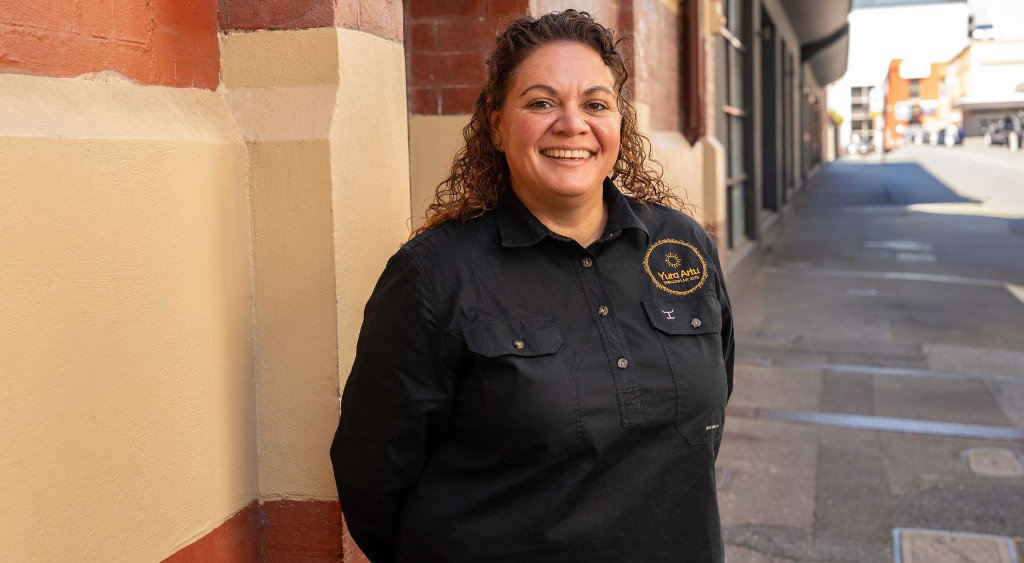
Outback art tours, a native botanical skincare range and an Aboriginal-owned wine label; the faces behind these projects are South Australian innovators who all draw inspiration from the same sacred place – the land. We share their stories about culture, creativity and collaboration on Country.
1. Rehanna Coulthard
Yura Artu Founder, Artist and Tour Guide
Proud Adnyamathanha woman
For Australian contemporary artist Rehanna Coulthard, Country has always been home.
Growing up in the northern Flinders Ranges on Adnyamathanha Yarta, many of Rehanna’s earliest memories are of being taken out on Country by her grandparents and cultural mother.
“One of the photos I have of myself as a little girl is standing in sandals in a creek bed near an ochre pit,” Rehanna recalls.
Those childhood experiences eventually became an important part of her life and her art. Rehanna’s story on canvas began unexpectedly while completing her year 12 major art piece.
“My teacher said, ‘Well, you’re Aboriginal. Why don’t you do an Aboriginal art piece? And I’m like, ‘Just because I’m Aboriginal doesn’t mean I know how to paint’.
Rehanna leaned into a place deeply connected to her identity and family: Ikara (known widely as Wilpena Pound). She painted Ikara Muda (the Creation story of Adnyamathanha).
“That was the start of me realising art was my therapy,” she says.

Today, art and culture are inseparable for Rehanna, who describes painting as a way of keeping storytelling and connection alive. Another way Rehanna does this is through the cultural tourism business, Yura Artu, which she founded in 2025.
She’s one of the only female Adnyamathanha guides in the Flinders Ranges.
At the heart of Yura Artu is something her grandfather taught his family: “How can we expect the white man to understand unless we’re willing to teach him?”
Through Yura Artu tours, Rehanna shares Adnyamathanha Country with visitors to the region, inviting them to experience culturally significant places and learn about ancient petroglyphs (artwork carved on rocks) and rock paintings.
Creation stories are told, kinship is formed and cultural protocols are taught. It’s about conversation, connection and experience, and Rehanna uses art to begin this dialogue. On Yura Artu tours, she explains how particular symbols, patterns and perspectives can carry meaning and how stories can be represented visually through an Adnyamathanha lens.
Today, Rehanna’s art is found in homes and collections throughout the Flinders Ranges, including prints featured in the new eco villas at Rawnsley Park Station.
She’s now working with her family on a project to preserve and strengthen Adnyamathanha language for future generations.
“What we’re working towards is taking that written language and making it accessible digitally, so our young people aren’t limited to picking up a book. They can see the word, see how it is spelt and hear how it is spoken.”
Whether standing in front of a canvas, walking with visitors on Country, sharing a Creation story, truth telling or working to preserve language, the thread running through Rehanna’s work remains the same: Country, culture, family, identity and connection.
“When I create, it connects me. I think about Country and the stories and knowledge that have been shared with me. I think about who I learnt those things from.”
2. Tjimari Sanderson-Milera
Ruwi co-founder and Managing Director
Proud Kokatha, Narungga, Kaurna and Adnyamathanha man
A long list of unknown chemicals can be found in many skincare products on supermarket shelves but there’s something different in South Australia’s new skincare brand, Ruwi – more than 80,000 years of cultural heritage.
The faces behind Ruwi (meaning ‘from the land’ in the language of the Ngarrindjeri people) are three friends. One of those is co-founder and Managing Director Tjimari Sanderson-Milera who, together with his mates, set out to challenge today’s beauty standards.
Despite growing up in Adelaide, Tjimari spent years walking native botanical and bush food trails with his dad and mum on Country in the Flinders Ranges.
“We thought how cool would it be to see an Aboriginal brand on those shelves because it’s a space where you don’t see many people from community.
“We found there were lots of brands that use native botanicals in their products but not really providing any context around that from a cultural perspective in terms of the medicinal and nutritional value.”
Ruwi blends native botanicals with holistic skincare, crafted in Adelaide, using Australian flora that First Nations Australians have used for thousands of years. Think Kakadu plum, native snowflower, finger lime, kangaroo apple and quandong, to name a few.
Officially launched in 2025, Ruwi focuses on sustainable skincare, mixing old-world ingredients with new ideas.
“These native botanicals have been used for thousands and thousands of years,” Tjimari explains. “So, it’s about paying homage and showcasing those botanicals and putting them a bit more on a global map.”
The Ruwi range includes Kakadu Plum Serum, Dreaming Moisturiser, Quandong Scrub and Finger Lime Cleanser. In the new year, Ruwi is planning three more products, including a face mask made from snake vine – a vigorous Australian native climber known for its bright golden-yellow flowers and glossy green leaves.
But, according to Tjimari, Ruwi isn’t just about skincare.
“We’re highlighting the fact we have these native botanicals here in our own backyard, and we don’t have to source them from other parts of the world.
“Every ingredient in Ruwi has been walked, talked about or picked with us before it ever touched a bottle.”
3. Pauly Vandenbergh
Munda Wines Founder and Owner
Proud Wirangu and Kokatha man
It wasn’t enough for Pauly Vandenbergh to be one of the first Indigenous South Australians to own a wine label; he knew his wine needed to stack up against other premium brands.
However, Pauly, who grew up in Ceduna and is a cultural educator and entrepreneur, doesn’t want people to just love the taste of his label Munda Wines, he wants them to appreciate the land where the grapes have been picked.
“There was a lack of acknowledgement of the land where all these grapes and vineyards sit on.
“And, so then I started thinking, how many people know that the Ngadjuri and Peramangk people are the Traditional Owners of the Barossa region? That’s a pretty cool fact.”
There are eight bottles under the Munda Wines label. Each drop is inspired by Traditional Countries from across Australia, from the Walgalu Country Chardonnay in New South Wales to the Kaurna Country Shiraz here in South Australia.
It’s a mark of genuine respect that Munda Wines only makes wine from regions where Pauly has a connection with the Traditional Owners. The wines’ labels also speak to this relationship, reflecting the colours and stories of the landscapes as recommended by the Traditional Owners in each region.
Currently made using traditional French or American oak, Munda Wines is now investigating whether it’s possible to create wine barrels from native Australian wood.
“We’re also looking at how we can use more Australian products to create different flavours,” he says. “And then who knows, maybe one day adding different ingredients into our wine, like the quandong [native Australian fruit].”
Munda Wines’ broader mission goes beyond crushing grapes – it’s all about creating connection and conversations. “I’ve always said the best yarns happen over a glass of wine,” Pauly says.
“We want to encourage people to be curious and respectful about the Traditional Countries that produce these wines.
“If someone sees the word ‘Kaurna’ on a bottle of Munda Wines, and this leads them to learning more about the Traditional Owners of this Country, that’s a huge win for us.”
Pauly’s connection to the land, however, goes beyond the bottle. An advocate for his people and the land, Pauly is founder of several social ventures including co-founder of the Aboriginal-led not-for-profit Aboriginal Basketball Academy and Tjindu Foundation, which empowers Aboriginal youth across South Australia.
No matter who you are, Pauly’s message is the same: “Go and do stuff.” The kid from Ceduna did, and it changed his life.
RAA Rewards
RAA members can receive discounts on Yura Artu tours and Ruwi and Munda Wines products.