
Why buttons are back
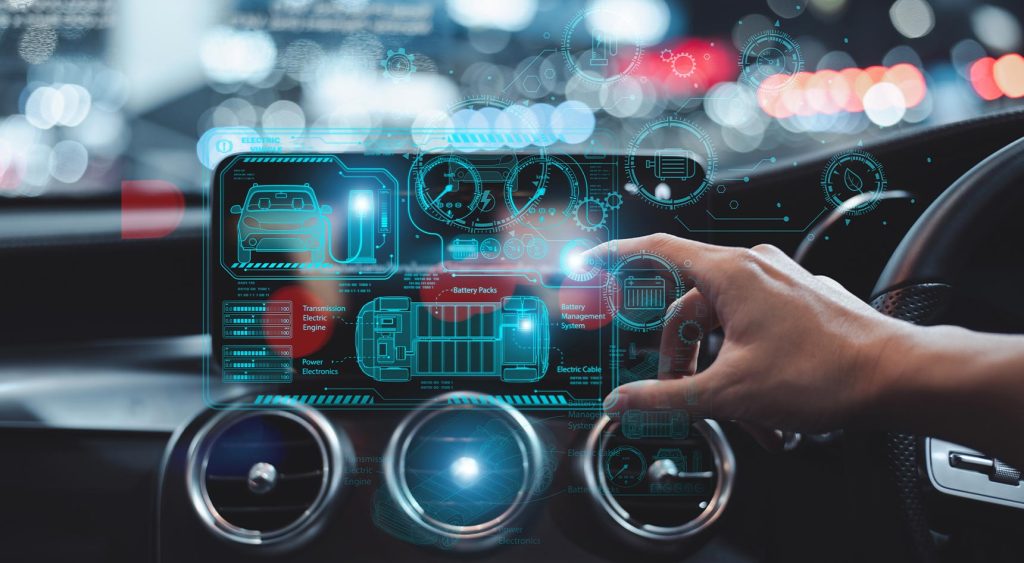
Technology is advancing in leaps and bounds – there are even fully autonomous cars in America and China that can drive with their passengers relaxing in the back seat.
Touchscreens are getting bigger, more complicated, and buttons are disappearing from dashboards.
Has our digital desire gone too far?
From modest beginnings…
The first car with a digital touchscreen was the 1986 Buick Riviera. Far ahead of its time, the green-and-black Graphic Control Centre (or GCC for short) put audio and climate control at drivers’ fingertips.
It also displayed information such as motor readings, brake diagnostics, maintenance reminders and a calendar. It aimed to “transform a trip to the 7-Eleven into a space odyssey”.
This was the 80’s – a time of revolutionary innovation and vast imagination. Microsoft Windows 1.0 had just been released, NASA’s Space Shuttle orbited the Earth and DNA genetic profiling had been discovered. The future was nigh.
But by 1990, a mere four years later, Buick’s GCC had been discontinued. It was too distracting. Customers complained about taking their eyes off the road and struggling to navigate on-screen menus while driving. Sound familiar?
…to extreme minimalists
By 2021, touchscreens were everywhere: phones, airport check-in terminals and, of course, cars.
That year, Mercedes-Benz unveiled its massive, curved glass display – 1.41 metres of digital dashboard stretching from pillar to pillar – to a round of futuristic applause.
With more computer power than many laptops, the screen controlled everything from audio and navigation to seat comfort, driving modes, climate control and driver monitoring. It even sent birthday reminders and was integrated Microsoft Teams. Touch gestures, voice commands and haptic steering-wheel feedback promised an intuitive, friction-free driving experience.
It felt like science-fiction perfection, and the closest we’d come to the flying cars of Back to the Future II or the Batmobile.
Fast forward to today – the beginning of 2026 – and Mercedes are dialling back on their all-digital interior because it’s too distracting. Customers are complaining about haptic steering-wheel controls and touchscreen-only access to basic functions like volume and climate.
Are buttons better?
Australia’s independent voice on vehicle safety, the Australasian New Car Assessment Program (known as ANCAP SAFETY), thinks buttons are better than touchscreens. In fact, from 2026, ANCAP will penalise new vehicles in their safety ratings if essential driving functions are buried in complex touchscreen menus.
ANCAP are calling for car manufacturers to bring back buttons, particularly for critical driver controls like the horn, indicator, hazard lights, windscreen wipers and headlights. ANCAP are not alone, with Euro NCAP introducing similar criteria, reinforcing the global shift back towards physical buttons.
Manufacturers are listening to calls for physical buttons to return. Mercedes-Benz’s Chief Software Officer, Magnus Östberg, has publicly acknowledged that physical controls are often safer and more effective. Meanwhile, Tesla owners can now retrofit their minimalist interiors with aftermarket buttons and knobs at a price.
Why buttons matter
RAA Principal Advisor for Energy and Future Mobility Peter Nattress says distracted driving, as one of the fatal five causes of road crash casualties, takes many forms.
“People understand obvious distractions like texting or scrolling on a mobile phone, eating, drinking or being preoccupied with passengers,” Peter says.
“But because respected manufacturers build these elaborate touchscreen systems into cars, many drivers don’t realise how unsafe they can be.”
An independent study by researchers at Norwegian research company SINTEF used eye-tracking technology to measure how long drivers looked away from the road when using touchscreens. The study found that simple tasks, like adjusting temperature via the touchscreen, caused drivers to divert their gaze for as much as two full seconds. At 60km/h, you travel approximately 33 metres in two seconds – about the length of six vehicles.
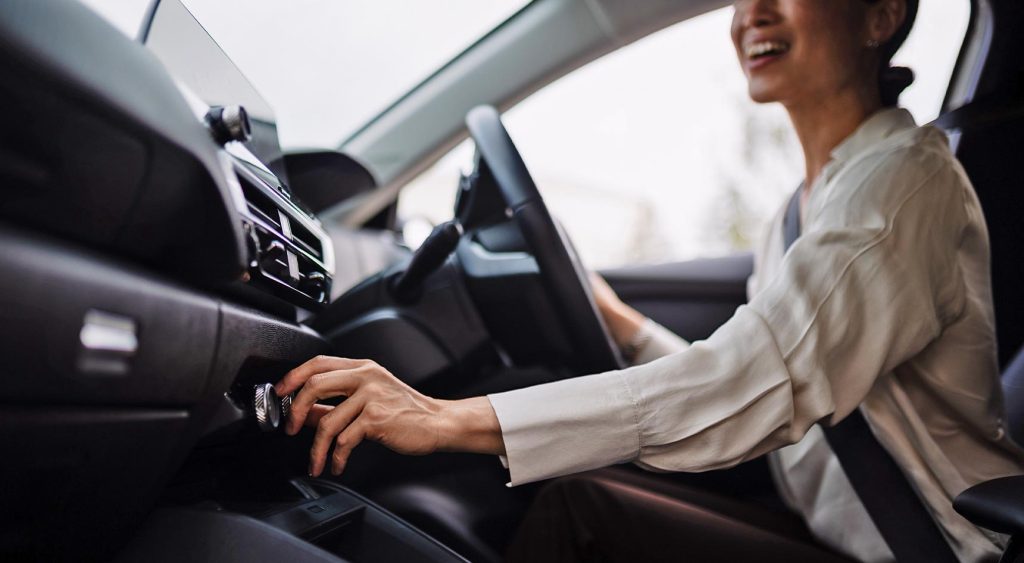
Physical buttons fall back on muscle memory, the brain’s ability to perform familiar actions without conscious thought. Drivers learn the location, shape and resistance of controls over time, allowing them to adjust volume, demist a windscreen or activate indicators without looking away from the road.
Buttons also provide immediate feedback through movement and resistance, work in different lighting situations and while wearing gloves. Critical functions can be accessed in a single action and, in safety-critical moments, prompt and confident reactions matter.
Peter says good design is about reducing the driver’s cognitive load so they can remain focused on their surroundings.
“As drivers, we are increasingly surrounded by potential temptations to steal our attention away from the task at hand: driving,” Peter says.
“Technology should complement, not compete for the driver’s attention.
“The best systems are the ones where drivers don’t even know that they are being assisted by the car to keep everyone safe.”
The evolution of in-car technology shows progress isn’t always about adding more screens. Sometimes, it’s about knowing when to stop – and maybe even reverting back to basics.
As manufacturers rethink design and safety bodies push for change, the humble button may yet prove that the smartest technology is the kind that lets drivers focus on driving.