
9 EV charger etiquette tips
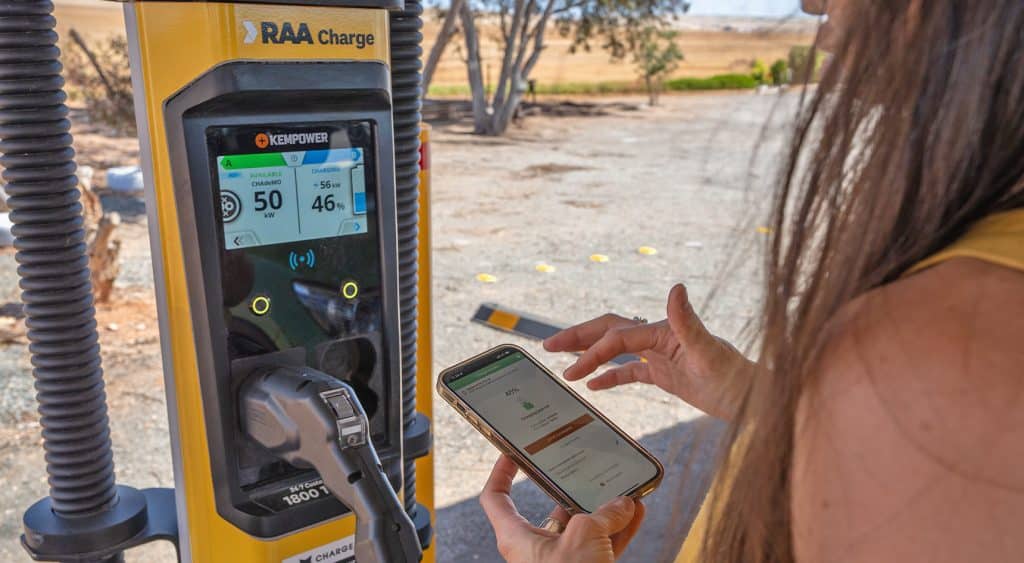
Nobody likes queue jumpers, mess-makers or those who take more than their share. The same applies when you’re using an electric vehicle (EV) charger.
With more EVs on SA roads than ever before, good charging practices are just as important as good fuel bowser habits – and will save you time, money and frustration.
South Australia’s estimated 19,265 plus electric vehicle (BEV) cars share about 400 public EV charging locations, including more than 140 RAA Charge sites. That’s an average of about 50 EVs per location.
This shows that there are plenty of chargers for everyone, and the EV network is continuing to grow.
Small courtesies like moving on once you’ve charged your vehicle and keeping the bays tidy help keep things running smoothly for all EV drivers.
Here are our top etiquette tips to help you plug in, power up and pull away like a pro.
1. 80 per cent is the new 100 per cent
Unless there’s nobody waiting or you absolutely must fully charge your battery for the extra range, avoid staying plugged in above 80 per cent. A DC fast charger can take your EV from 10 per cent to 80 per cent in 15 to 45 minutes.
Above 80 per cent many EVs will significantly reduce the amount of power delivered to the battery. This means it can take the same time – or even longer – to continue charging the remaining 20 per cent as it takes from 10 to 80 per cent.
On a long trip, ending your charge at 80 per cent and then topping up every two hours can not only save you time in the long run, but also gives you the excuse for a much-needed rest and stretch break so you stay alert and safe behind the wheel
2. Avoid overstaying your welcome
Don’t hog the space. Once you’ve reach the level of charge you need, move your vehicle to another parking spot, and then continue shopping. Sharing cost nothing but overstaying your welcome can come at a price.
Some sites charge idle fees of up to $1 per minute when vehicles remain connected to a station well after reaching full charge. With nearly 20,000 EVs now on SA roads, these fees help keep chargers available for everyone.
Take note of the time, and check the on-screen info or charging app to see how long it will take for your vehicle to charge so you can be ready to roll on out of there once it’s finished.
3. A fine that’s ICEing on the cake
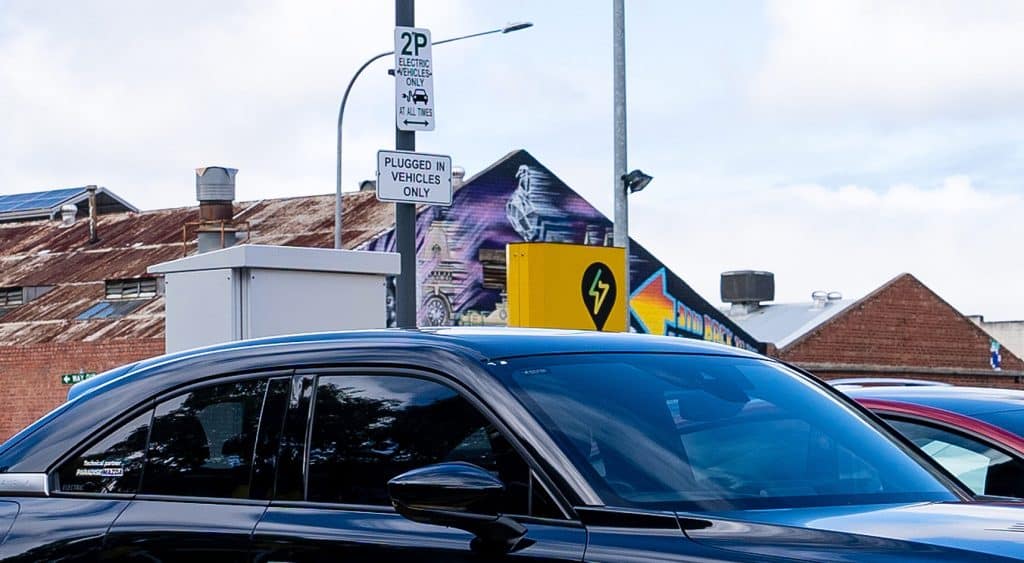
You’re driving an ICE vehicle, and the only spot left in the car park and is an EV charging bay. That’s fine, right? Actually, you will receive a fine.
ICEing isn’t a sweet treat. The term was coined for when drivers in ICE vehicles – cars that run on petrol, diesel or gas – park in spots dedicated to EV charging. EV drivers aren’t immune though. Any drivers who park their vehicles in an electric vehicle charging bay, for any reason other than to charge an electric vehicle, can receive a fine of up to $111 , plus a $105 Victims of Crime Levy if issued by police.
Oh, and plugging in and pretending to charge to save a parking spot isn’t on either. The authorities can spot you ghost charging too. Now that leaves a sour taste.
4. The need for speed
A charger with multiple plugs will sometimes share power between each driver that’s plugged in. Just like when multiple people are streaming videos over Wi-Fi at the same time, everyone’s speed drops. If you can, plug into an unused charger in the first instance to get maximum speed for you and your fellow EV drivers.
While we’re on the topic of speed, do you really need to use the DC fast charger? If you’re not in a hurry and have time to stop and smell the roses, try leaving the fast charger for someone who needs it.
5. A trickle causing a big ripple
You know that feeling when you receive an electricity bill that’s much higher than you anticipated? And you’re wracking your brain to figure out what could have caused it? Well, imagine how accommodation owners feel when you trickle charge from your motel room without them knowing.
Some accommodation venues or attractions may already be on the charging network, some may let you use their electricity from an outside socket, and others won’t have any charging capability at all.
Next time you’re on a road trip, it’s good manners to check with the accommodation providers ahead of time, or for peace of mind, book a stay at one of the 51 RAA Charge destination accommodation sites. Charge your vehicle for less – and all while you’re sleeping.
6. Leave it better than you found it

The camping motto applies just as well to the charging bay you’re about to leave. It’s simple: make sure the charging bay is in good nick for the next person who comes along. Isn’t that how you’d like to find it?
This includes wrapping the long cables neatly, then hanging them back up when you’re finished so it can’t be run over and damaged, and ensuring the plug is securely back in the charging station.
In the case of a charger that isn’t working, use the relevant charging app or call the number to lodge a fault, and leave a comment on PlugShare so future visitors can be forewarned.
7. There’s no place like home
If you can, charge your car at home and you’ll save both time and money. Costs vary depending on car requirements, energy tariffs, and whether you have solar and battery but it means you won’t have to wait at an EV charging station and save you having to fork out at a pricier public charging bay.
8. Practice makes perfect
A little bit of prior preparation and planning can go a long way to help preserve your pride and avoid provoking other patrons. So if you’re using a public charger for the first time, don’t wait until you’re 200km from home to give yourself a crash course in how to use it. Instead, take a leaf out of the Scouts handbook, and be prepared:
- Before leaving home, download and link your payment account in the appropriate app, such as Chargefox for the RAA Charge network
- Practice at a DC charger that’s close to home, and during an off-peak time. That way, if you have any questions, you have a support network not far away – including the RAA.
9. Mind your Ps and queues
As EVs gain in popularity, each public charger is shared among a higher proportion of drivers. If a charger is busy, simply wait your turn. Park nearby so you can keep an eye on the charge or try a different location.
You can also use apps like PlugShare to acknowledge you’re next in line. If everyone uses the same system, everyone wins.
Bonus tip: Go the extra mile
Kindness never hurt anybody and, with the uptake in sales of EVs, there’s many new drivers joining the club.
This means there are drivers who will be using public chargers for the first time. If you see someone confused or taking longer than you’d like, be kind. Help them out and show them the ropes. To our seasoned EV drivers, you helped pave the way, so you know how it feels to be new.
Want to learn more about going electric?
Talk to our motoring experts for free advice on anything from buying to maintaining an EV.