

POLL: Is it okay to park in front of your neighbour’s house?
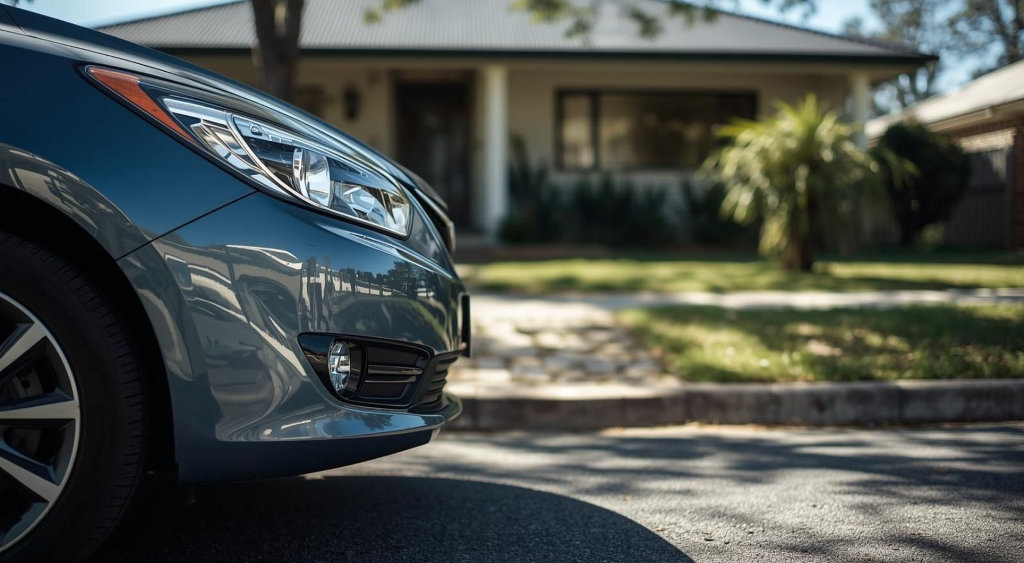
Your New Year’s resolution to clear out the garage hasn’t happened yet, so it looks like you’ll be parking on the street – right in front of Barry’s house. Baz won’t mind, right?
In this instance, just because you can, it doesn’t necessarily mean you should.
According to RAA Senior Manager of Safety and Infrastructure Charles Mountain, there’s no law preventing you from legally parking along the kerb in front of your neighbour’s house, but there are restrictions.
POLL: Is it okay to park in front of your neighbour’s house?
How close can I park to a driveway?
Parking too close to a driveway can obstruct the vision of a motorist trying to enter or exit a property. That’s why it’s important to make sure your kerbside park is legal and safe.
“While it’s legal to park right up to the edge of a driveway, it can make it extremely difficult for the resident to safely reverse their vehicle out of the driveaway and see approaching traffic,” Charles explains.
“This is guaranteed to really annoy your neighbour, particularly if you do this more than once.”
Our advice? Park at least a metre from the edge of the driveway to make manoeuvring in and out of a property easier.
Check your surroundings
Besides your neighbour’s driveway, watch for fire hydrants and plugs, generally marked with a short yellow line. These are in specific locations so firefighters can access water safely and efficiently in an emergency. Obstructing access here with your vehicle can result in a fine issued by the local council.
When there’s no other option…
If you must park your vehicle on the street, park as close to the kerb as possible.
“This minimises the intrusion into the road space and reduces the risk of being sideswiped,” Charles says.
“Some residential streets are quite narrow so if you park opposite another vehicle, there must be at least three metres between the widest point of your vehicle and theirs,” he explains.
“This minimum clearance is important as trucks are 2.5 metres wide, so if you don’t leave sufficient width, not only do you risk your vehicle being damaged, but you can also be fined by the council.”
Final word

Your neighbour might feel territorial about the parking spot outside their house, but it’s not against the law for you – or anyone else – to park there, unless otherwise signed. That said, Charles recommends only using street parking when absolutely necessary. The road shouldn’t be considered a long-term parking spot.
“If you’re going away for a few weeks, don’t leave your vehicle parked on the street unless you have a residential parking permit and no off-street parking options,” he says.
If you must park your vehicle on the street, try to do so in front of your own property rather than your neighbour’s. If you have parking space on your property, like a garage or driveaway, that’s even better – park there when possible to keep everyone happy, especially Baz.