

Locust swarms: the hidden hazard on the road
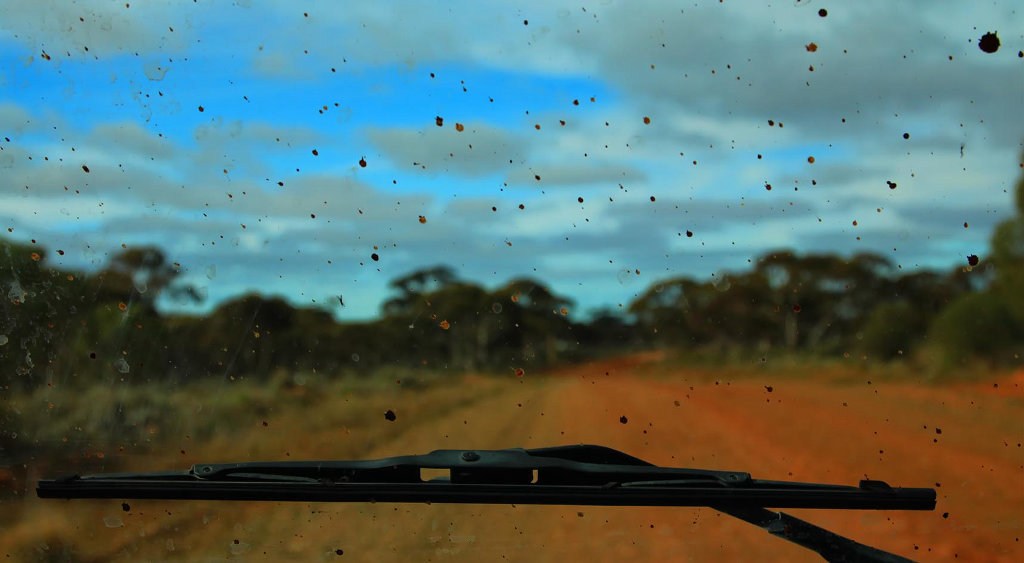
Fatigue, high speeds and kangaroos are all risks that come to mind when driving on country roads, but what about… bugs? Well, locusts to be more specific.
Due to heavy rainfall, there has been a population explosion of Australian plague locusts across South Australia, Victoria and New South Wales.
This is a threat to bumper harvests across the Mallee, Riverland and Wimmera regions. They can also create a hazard for people driving on country roads.
The risks
So, what happens when you’re driving on a regional road and encounter a locust swarm? First, they can reduce visibility making it hard for you to see signs, other vehicles and other hazards on the road.
The swarms can even make the road slippery and reduce grip when cornering or braking.
Your car is also at risk when you drive through a locust swarm. The bugs can get into the radiator and air intake, reducing air flow to both the vehicle’s cooling system and air-conditioning system.
The locusts might smear over the windscreen and headlights and reduce visibility and can damage the car’s paintwork if they’re not washed off quickly.
Be prepared
Even before you leave home, you can prepare for a locust swarm. If you drive an older vehicle, stretch soft fine mesh over the grille. Make sure it’s breathable so sufficient air can still reach the car’s cooling system, and don’t cover lights, indicators, number plates and sensors.
Don’t do this on newer vehicles as there are sensors built into the grille, and covering them could disable functions like driver assist and other crash avoidance features.
Make sure your windscreen wipers are working properly and in good condition and fill the washer bottle. It’s also a good idea to carry some spare washer fluid, soft cloths and glass cleaner when driving into country areas.
On the road
Swarms can appear at any time when you’re on the road, however they usually only take a few minutes to pass.
Senior Manager of Safety and Infrastructure Charles Mountain says it’s best to safely pull over to the side of the road and wait for the swarm to pass if possible.
“To stop safely, indicate, slow down before pulling fully off the road,” Charles says.
“Turn on your hazard lights and keep your headlights on, but avoid using high beams or light bars as they can dazzle oncoming traffic.
“If you can’t stop safely, slow down gradually, increase your following distance, turn on your headlights and wind the windows up.”
After a swarm
After driving through an insect swarm, watch your temperature gauge and any warning lights, since they can signal cooling system problems.
Stop at rest area or town and check your vehicle. Clean the windscreen and headlights with washer fluid, then wash with water and a soft cloth. Avoid wiping them with a dry cloth as it can smear insects and scratch the glass.
Gently brush or rinse insects off the radiator from outside, avoiding high-pressure air or water to clean the engine bay. Don’t open the radiator cap or coolant reservoir when the engine is still hot.
Lastly, have the air filter inspected if the vehicle feels sluggish or the engine light comes on, and wash the vehicle soon after driving.
For current warnings and advice about locust swarms, visit the PIRSA website.