

Historic Hindmarsh
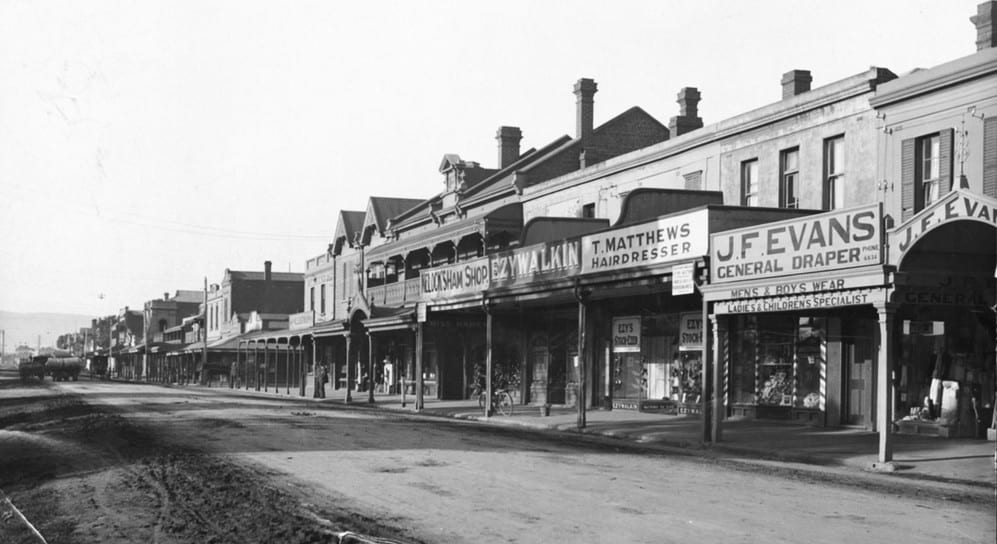
If Colonel William Light’s Adelaide town plan had been fully implemented, there’d be a canal running down the centre of Port Road linking the River Torrens to Port Adelaide.
Goods could’ve been ferried from the coast to the city at a time when sea cargo was the only cargo. The project proved too expensive and we’re now left with an odd parkland sandwiched between six lanes of traffic.
If Governor Hindmarsh had his way, the CBD would be at Port Adelaide, thus rendering footy showdowns pointless.
In the early days of settlement, Hindmarsh and Light rarely got along, even though it was Hindmarsh who recommended Light be employed as Surveyor-General. Disagreements among the fledgling colony’s powerbrokers eventually led to Light resigning in June 1838. A month later, less than two years after his arrival in SA, Hindmarsh was recalled to London.
Before he left, he shrewdly snapped up some good chunks of land, including a sizeable patch en route to the Port. When subdivided it became the township of Hindmarsh.
In the centre of town was a public reserve named Lindsay Circus. This eventually became Hindmarsh Oval, the home ground of West Torrens Football Club from 1905 to 1921, and more recently Coopers Stadium. Go Reds!

Any A-League fan who’s parked on the south side of the River Torrens on game day will have crossed the small bridge at the end of Holland Street. Fans may not be aware the bridge was engineered by John Monash – later, General Sir John Monash – who in 1918 commanded all of Australia’s troops during World War I in Europe.
Monash University in Melbourne and the town of Monash in the Riverland were named in his honour, while his likeness graces the $100 note.
The small building that became the impressive Hindmarsh town hall was built in 1860 and extended in 1886. Through the years, it’s housed the Star Picture Theatre, a library and a rollerdrome, and it’s now an Education Development Centre. The art-deco frontage was added in 1936.
Images above show the town hall before and after the art deco makeover, and the Holland Street Bridge. 1928 B&W image: State Library of South Australia B 4830
The Hindmarsh Cemetery was established in 1846 on land that was originally set aside for a market. The small brick shed on-site was once known as the “dead house” due to the many bodies stored there during the 1918–19 flu pandemic, which caused more than 50 million fatalities worldwide
In 1930 the Torrens flooded, washing away part of the cemetery and sweeping six buried bodies downstream.
These days, a deluge on that scale is hard to imagine but flooding was a serious issue until mitigation programs were undertaken. The Torrens used to empty into a wetland behind the West Beach dunes, and during times of high flow the water would travel south to the Patawalonga outlet and north to the Port River.
Before its development as a housing estate, West Lakes was part of this system.
The artificial outlet at Henley Beach South/West Beach was built in 1937, and in the ’60s the construction of the Kangaroo Creek Reservoir further reduced flooding.
The Hindmarsh Fire and Folk Museum is housed in the old volunteer fire station near the Manton Street entrance to Coopers Stadium. A 1927 Chevrolet fire engine sits pride of place among the displays. The museum houses a wealth of local artefacts and a fascinating collection of historic photos.
The volunteer staff are the full bottle on local history and are also involved in the maintenance and restoration of exhibits.
The museum is open every Wednesday from 9am–1pm and at night by special arrangement.