

5 road rules you’re still getting wrong
sa move readers tackle some of the hardest road-rule questions in our quizzes. Most motorists are road-rule masters, but some are still getting the basics wrong. See if you need a refresher on these five rules.
1. How far can you drive in a bus lane?
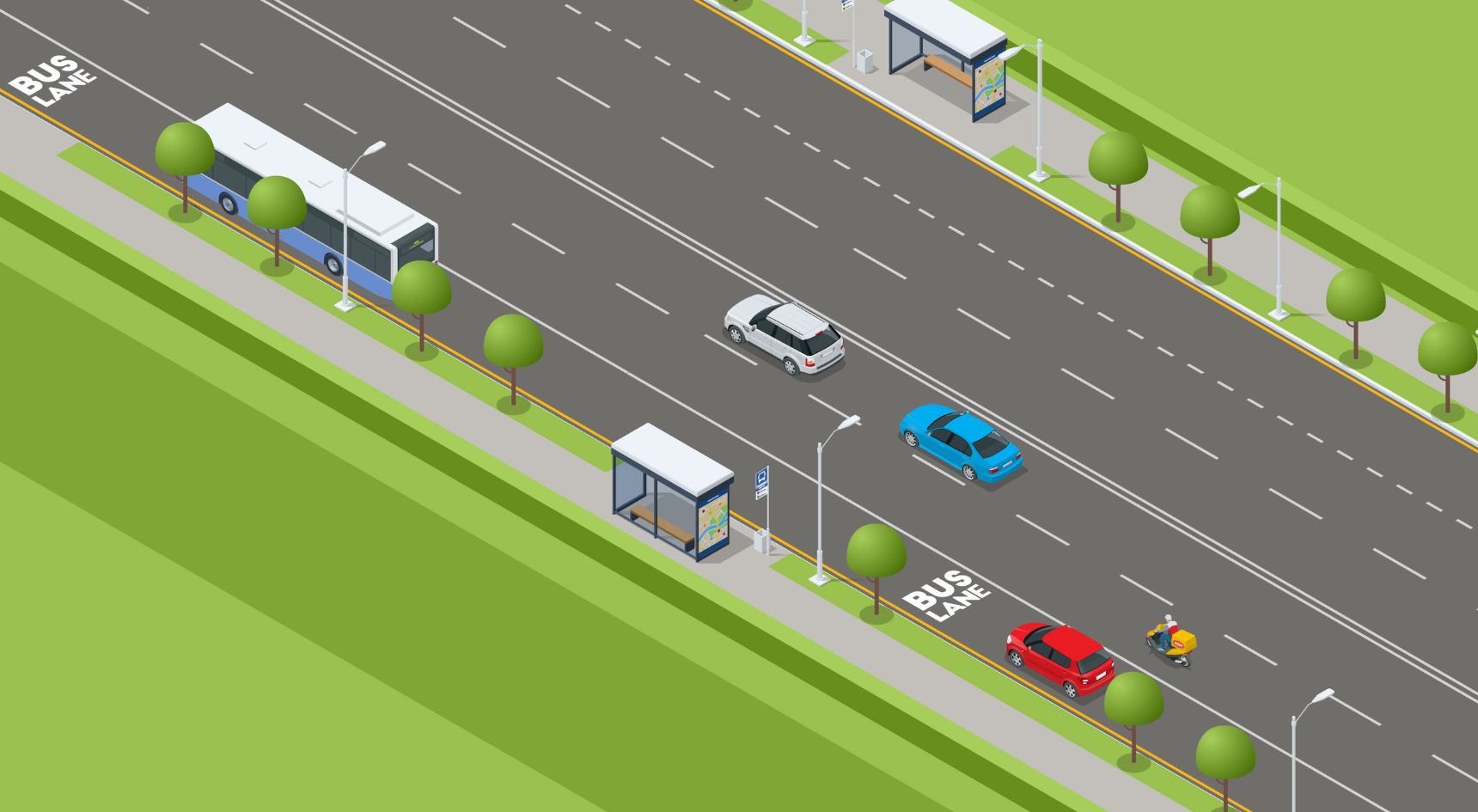
Bus lanes are clearly marked on the road (like the one in the scenario pictured above), but is it ever okay to drive in these lanes, and if so, how far? This question confused about two thirds of sa move readers in a previous quiz.
In South Australia, you can drive in most bus lanes for up to 100 metres, but only with good reason, such as turning off the road, entering a road or passing a vehicle waiting to turn right. Separately, and with no distance limit, you can enter a bus lane to get around an obstruction, or if a sign permits it. Check the sign or road markings too as some bus lanes only operate at certain times.
Bus only lanes, on the other hand, are painted red and marked ‘BUS ONLY’ in white. Stay out of them; they’re for public buses and emergency vehicles only.
PENALTY: Driving more than 100 metres or stopping in a bus lane will land you a $340 fine, plus a $108 VOC Levy
2. What’s the difference between a zip merge and a lane change?

There’s a fine line between a zip merge and a lane change, but sometimes there’s no line at all. When two lanes become one that’s your clue, you’re about to zip merge. In this instance, the vehicle in front goes first.
A lane change is different and happens when a vehicle is moving from one lane to another across lane lines. In this scenario, the vehicle crossing the lane lines must signal and give way to all vehicles in the lane they’re about to enter.
PENALTY: Don’t cross the line without thinking and don’t speed up to block merging traffic. Failure
to give way when merging or changing lanes can result in a $426 fine, plus a $108 VOC Levy and three demerit points.
3. What’s the maximum legal speed limit for an e-bike?
Nearly 70 per cent of sa move readers don’t know the answer to this question. In South Australia, you can ride an e-bike on the road without registration or a licence if the motor is no more than 250 watts and only works while you pedal.
The motor must stop helping when you reach 25km/h or when you stop pedalling. If your bike can move using the motor alone, or has a stronger motor, it’s treated as a motor vehicle, so you’ll need registration, a licence and insurance to ride it on public roads.
Fitting your own petrol engine won’t help either. Those bikes can’t be ridden on SA roads. If you do, you could get a $478 fine, plus a $108 Victims of Crime (VOC) Levy.
According to RAA Senior Manager of Safety and Infrastructure Charles Mountain, e-bike users must ride at a speed that’ll allow them to give way to pedestrians also using the path.
“Always stick to the legal speed limit and wear a helmet,” Charles says.
PENALTY: If the motor keeps assisting you past 25km/h, your bike becomes an unregistered motor vehicle in the eyes of the law. You could be fined for riding an unregistered and uninsured vehicle and without a licence.
4. When does the ‘keep left unless overtaking rule apply’?
Ironically, the ‘keep left unless overtaking’ rule is one many motorists don’t get, well, right. Few motorists know that the rule applies only on multi-lane roads where the speed limit is greater than 80km/h, or where a sign says so. In fact, a previous sa move quiz found about three quarters of respondents didn’t know when this rule applied.
What the rule means is you must not drive in the far-right lane unless you’re overtaking, turning right, making a permitted U-turn, avoiding an obstruction or driving in congested traffic.
Remember, ‘keep left’ doesn’t have to mean the far-left lane. “On a road with three or more lanes, the middle lane is perfectly legal,” Charles says.
PENALTY: Keep left (unless you need to be in the right lane for any of the reasons we’ve covered) or be fined $331, a $108 VOC Levy and two demerit points.
5. Who do I give way to at roundabouts?
Are roundabouts making your head spin? You might’ve been taught to give way to the right at roundabouts, but the Australian Road Rules state you must actually give way to any vehicle already in the roundabout, including bicycles and personal mobility devices.
“Giving way to the traffic already in the roundabout is important, but remain mindful of those approaching from the road to your right,” Charles says. “There’s a good chance those vehicles will enter the roundabout before you.”
A recent sa move quiz also found one in five respondents don’t know they need to indicate left when exiting a roundabout.
“If you don’t indicate, other road users may misjudge which exit you’re taking and may wait longer than they need before entering and could collide with your vehicle,” Charles says. “When leaving larger roundabouts, particularly multi-lane ones, indicating left when exiting is critical.”
Keep in mind, it’s not always practicable to indicate when exiting. For example, when you’re manoeuvring around very small roundabouts where it can be difficult to steer and indicate simultaneously.
PENALTY: Failure to indicate when leaving a roundabout can land you a $405 fine, plus a $108 VOC Levy and two demerit points.
Do you have a road rules question?
RAA’s road rules experts can help. Send us an email or speak to the Road Rules Information Service on 8202 4570.