

3 times you don’t have to give way to pedestrians
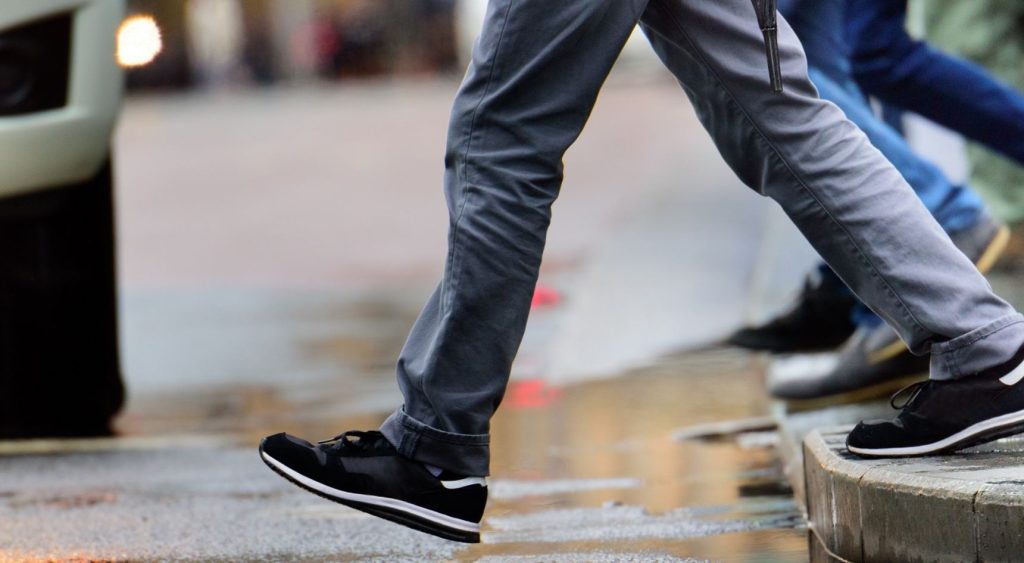
Giving way to pedestrians is a given, but is there ever a time when people on foot have to wait for drivers? Surprisingly, there are some scenarios where pedestrians must stop for motorists.
1. When walking across the road without a crossing
It’s not often you see a pedestrian casually walking across a road expecting drivers to stop for them (it’s rare but unfortunately not unheard of).
Here, the pedestrian waiting to cross the road must give way to a driver travelling straight along the road they’re waiting to cross. It goes back to basics: stop, look, listen and think. However, a driver must give way to any pedestrians attempting to cross the road the driver is about to turn either left or right into.
The rules change when there’s a crossing; in this case, the driver must then give way to the pedestrian.
2. When at a roundabout

Roundabout road rules can send anyone’s head into a spin. That’s why it’s important for all road users to be across the rules, including pedestrians.
Under the Australian Road Rules, pedestrians and bicycle riders should give way to any vehicle or bicycle rider entering or exiting a roundabout. In this scenario, pedestrians should wait for a safe gap in traffic before crossing and never step into the path of vehicles navigating the roundabout.
According to RAA Senior Manager of Safety and Infrastructure Charles Mountain, pedestrians should also never stand on the roundabout island.
“This can be extremely dangerous and shouldn’t be used as a space to seek refuge,” Charles says.
Instead, he urges pedestrians to always cross the road outside of a roundabout and use the designated pedestrian path and ramps, where provided.
“The safest option is to use these crossing points which are generally located a few metres away from the roundabout roadway at the intersection,” Charles says.
“If there’s a marked crossing nearby, use that as an even safer route.”
Motorists are only required to give way to pedestrians at a roundabout when there’s a marked pedestrian crossing. These ‘pedestrian priority’ roundabouts typically have zebra crossings at one or more legs; you may have spotted a couple at Henley Beach on Military Road at its intersections with North Street and South Street.
3. When pedestrian crossing signals show a red person
The red person starts flashing. When this happens, pedestrians need to wait and shouldn’t start to cross the road, unless they’re already in the process of crossing.
Unfortunately, some pedestrians think they’re faster on their feet than they really are. Quick dashes across the road before the light goes green for vehicles are never a good idea.
“There are no medals for making it across the road in the most dangerous way possible,” Charles says. There are fines though (keep reading for more on that).
According to Charles, pedestrians shouldn’t start to cross once the red symbol appears; instead, should wait for the next green pedestrian light, even if it costs you a few seconds.
Bonus: T-junction
We’ve thrown in this give way scenario (pictured above) as a bonus because it recently tripped one in three of you up in our ‘Who goes first?’ quiz last month.
In this scene, the red and green cars must give way to the pedestrian, but surprisingly, the blue vehicle isn’t legally required to give way to the person on foot. In this example, the pedestrian must in fact give way to the blue car.
“The safest option is for the person on foot to wait until all traffic clears. Once the intersection is completely empty, the pedestrian can safely cross,” Charles says.
“The drivers of all cars should be aware of the pedestrian and not proceed until making eye contact with the pedestrian to ensure their intent to wait for traffic to clear.”
Can a pedestrian be fined for not giving way?
Caught failing to give way or obstructing the path of vehicles in any of these three scenarios? Don’t be surprised if you walk straight into a $63 fine, plus don’t forget the $108 Victims of Crime Levy. This is the penalty pedestrians face by causing potential traffic hazards, like stepping out in front of a car at a roundabout, crossing on a solid red pedestrian light or failing to cross a road by the shortest safe route.
Final word
While vehicles don’t typically have to give way in any of these situations, Charles says drivers shouldn’t be complacent and always look out for pedestrians.
“A driver’s duty of care remains, whether there are pedestrians around or not,” Charles says.
“Motorists must always drive with due attention and take all necessary steps to avoid colliding with a pedestrian if they have already stepped onto the road.”