
Can you put up your own road signs?
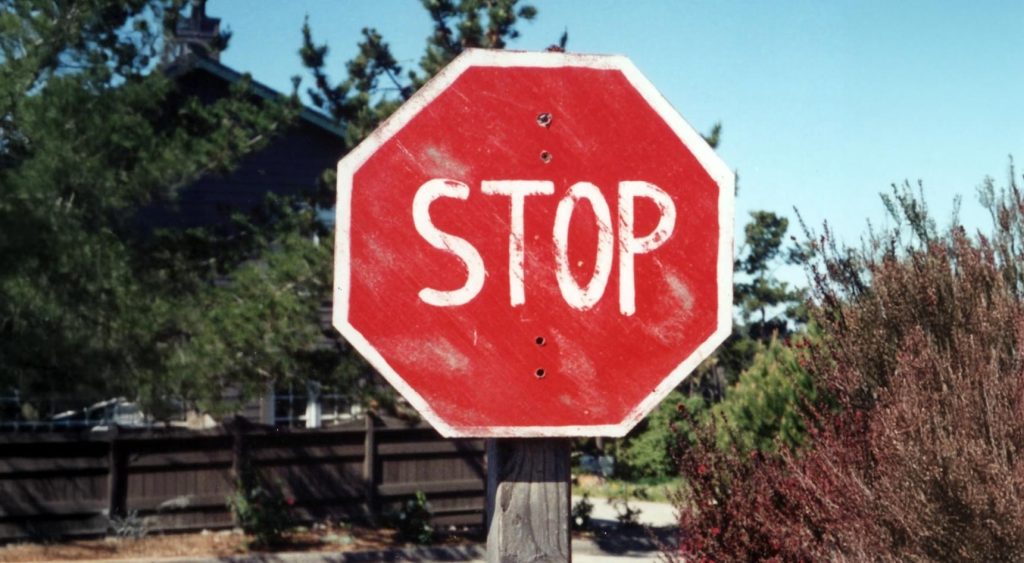
Maybe you’re frustrated by inconsiderate parkers and take matters into your own hands, installing your own ‘no parking’ sign.
Perhaps putting up a sign is a noble gesture to warn drivers to slow down by your house when children are present.
Despite your good intentions, putting up your own signs sends mixed signals.
As road users, we’re trained to recognise, comprehend and trust road signs, and make split second decisions based on colour, shape, icon, digit or word.
We expect these signs to be in predictable places like intersections and roundabouts. But a stop sign, speed limit or no-parking warning popping up somewhere unexpected causes confusion and distraction.
As Ace of Base sang, “I saw the sign, And it opened up my eyes, I saw the sign…but where do you belong?”.
So, is DIY signage a ‘Proceed with caution’ or ‘Wrong way go back’?
‘Stop’ in the name of the Australian Road Rules
Putting up a road sign on your own property isn’t banned. However, signs that could be mistaken for an official traffic control device aren’t allowed near to and visible from a road. If you want to buy a ‘Stop’ sign from Bunnings and hang it out of public sight as a feature in your backyard then go for it.
But a genuine-looking ‘Stop’ sign or reflective ‘No Parking’ sign attached to a street-facing fence, gate or driveway visible from the road isn’t allowed. The sign sits too close to real traffic and has the potential to confuse drivers.
This is where distance makes a difference. If signs are placed along a long rural driveway to manage traffic on private property, for instance, away from and out of sight of the public road, then that’s generally acceptable. Attach them to a public-road-facing gate though or within eyeshot of the road, and the ‘false traffic control device’ rules may apply.
Can you ‘Give way’ to your own designs?
Crafty people might consider designing or drawing a sign for their fence. If your sign uses different colours, shapes and wording, and is clearly not trying to mimic an official Australian road sign, then it’s less likely that you’ll be found to be breaking the law. However, your council may not be so pleased to see your artwork.
There’s another layer to this: South Australian planning laws state that any sign visible from a street, road, public place or by passengers on public transport can be seen as an ‘advertisement’ and would need council approval. Many councils have their own rules around the size and shape of advertising and signage. Distance matters here, too. For those with long, rural driveways, go your hardest. As long as it’s invisible from a public road, you can help visitors navigate your property using any materials you like. Just make sure it’s for your visitors’ eyes only.
‘Keep clear’ of trouble with unauthorised signs
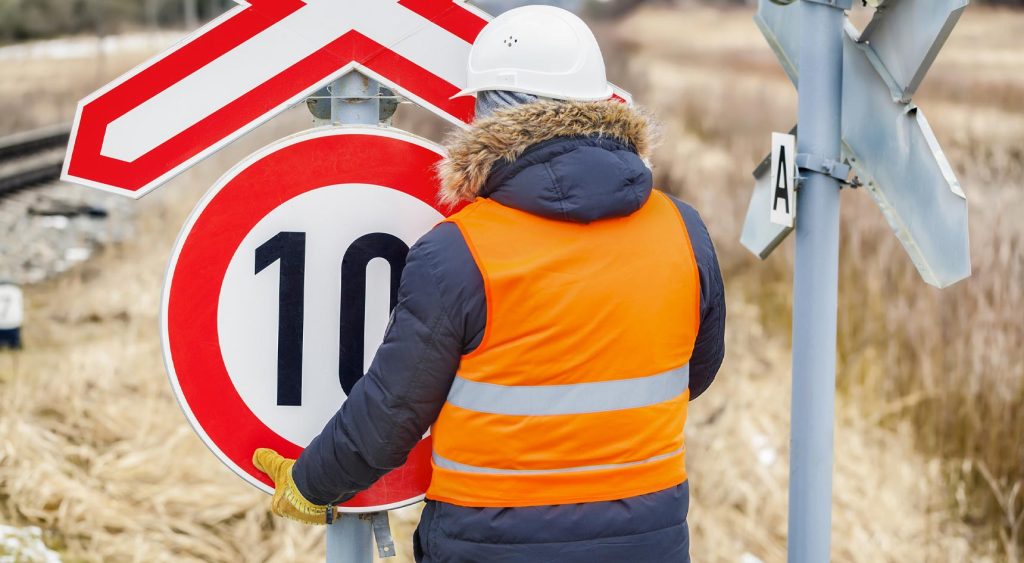
What happens if you put up your own signs and get found out? First, it depends on whether the sign is on your fence (private property) or if you’ve placed it on the road or footpath itself, like an A-frame out the front.
Let’s start with public spaces. If the offending sign is on the footpath, verge or road, your local road authority (be it the Commissioner of Highways or the relevant council) has the power to ‘remove and dispose of the sign Typically, that’s the end of it – no fines or warnings.
In some situations, you could be fined for ‘using a public road without a permit’ or ‘obstructing a public road’. You could even get in trouble for endangering drivers if the sign becomes a physical hazard. For example, if a motorist swerves to avoid the sign or it obscures a give-way sign.
Turning to private property. Yes, your fence isn’t the road, but it’s still not a billboard. You’ll receive a notice from the Department for Infrastructure and Transport (DIT), requesting you remove, modify or screen the sign by a certain date. If you do as you’re asked, nothing further happens and you’re free to get on with your life. Perhaps put those signs up in your backyard, away from prying eyes.
If you don’t comply, DIT can remove the sign for you and recover the cost from you as a debt. You could even receive a fine of up to $2500.
On top of that, your local council can get shirty under its own advertising rules if your sign is considered to harm the visual character of the area.
Of course, this all pertains to residential, suburban locales, as businesses have their own set of rules.
In short, only DIT, councils and their authorised officers and contractors can install traffic and parking signs in public. Contact your local council, DIT or RAA’s Report a Road service if you spot an unauthorised sign in the wild.
Consider this your sign to skip the warnings and notices on your fence and let the real ones stand tall on the roadside where they belong.